In short
- HomeStars' Canada-wide water damage guide: extraction $500–1,500, drying $300–3,000, board or ceiling patch $300–1,250.
- Health Canada: on a wet surface mould can start in 48 hours, and mould under the paint means the board comes out.
- Sewer backup is typically not covered by a standard home policy, says Insurance Bureau of Canada. Optional coverage exists, so call your insurer before the cleanup.
- A new home carries Tarion's two-year warranty on water penetration through basement and foundation walls.
Typical prices in Ottawa
| Job | Typical range | Notes |
|---|---|---|
| Water extraction | $500–1,500 | Canada-wide HomeStars guide |
| Drying and dehumidification | $300–3,000 | Same guide |
| Drywall repair or ceiling patch | $300–1,250 | Same guide; drywall repair $1.50–3 a square foot |
| Mould remediation | $1,500–4,000+ | Same guide; a separate trade |
| Dehumidifier rental | $500–1,000+ a week | Same guide |
Sources. Seen 29.10.2026: HomeStars, Water damage restoration cost (Canada-wide figures); HomeStars, Drywall contractors cost guide Ottawa (figures to March 2022). Rules: Health Canada, Addressing moisture and mould in your home; Insurance Bureau of Canada, Water damage and flood protection; Tarion, Warranty coverage after you close; Ontario, Your rights when starting home renovations or repairs.
Stop the source, then look at the wall
Water in drywall comes from somewhere: a roof, a supply line, a drain, a window, an appliance or the sewer. Drywall repair starts after that source is closed. A patch over a wall that still gets wet fails.
Safety steps only. If water is near wiring or a light fixture, switch the breaker for that area off. If a pipe is running, close the shutoff valve. Keep people out from under a sagging ceiling. The repair itself belongs to a trade.
That 48-hour mould window is why the timeline goes in the request: the day the water came in and the day it stopped.
What the company decides on site
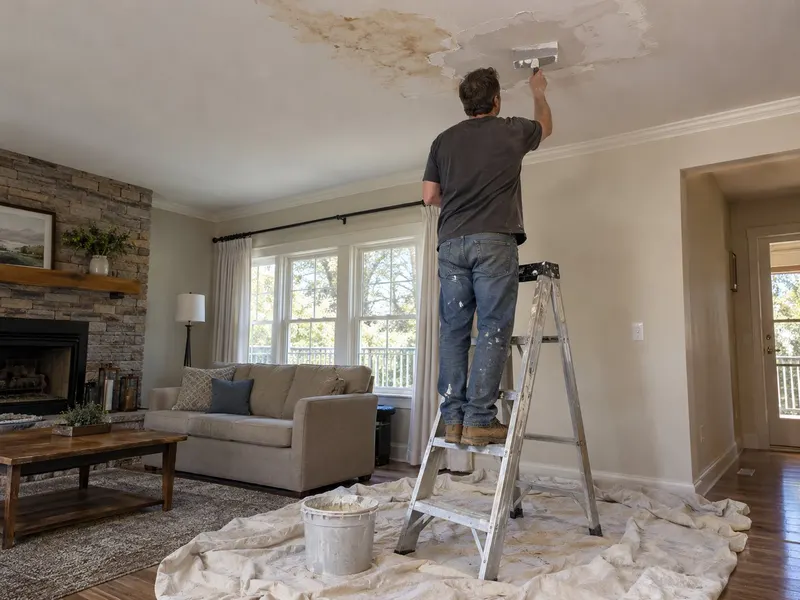
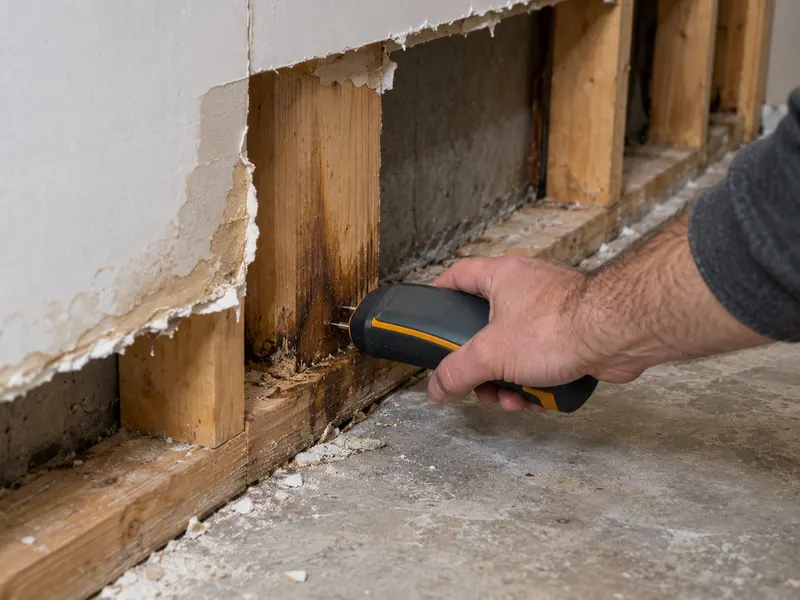
The company checks how far the water travelled. Board that is soft, swollen or crumbling comes out. Mould found under the paint sends that board out too. A cut goes past the stain to sound, dry board, and insulation behind a wet wall may come out too.
Then the framing needs to dry. The HomeStars water damage guide lists drying and dehumidification at $300–3,000. Closing a wall early traps moisture.
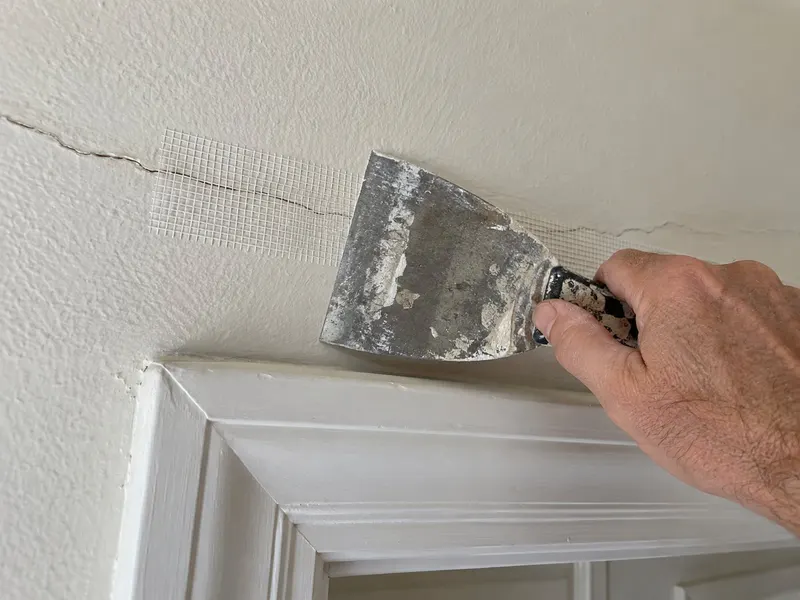
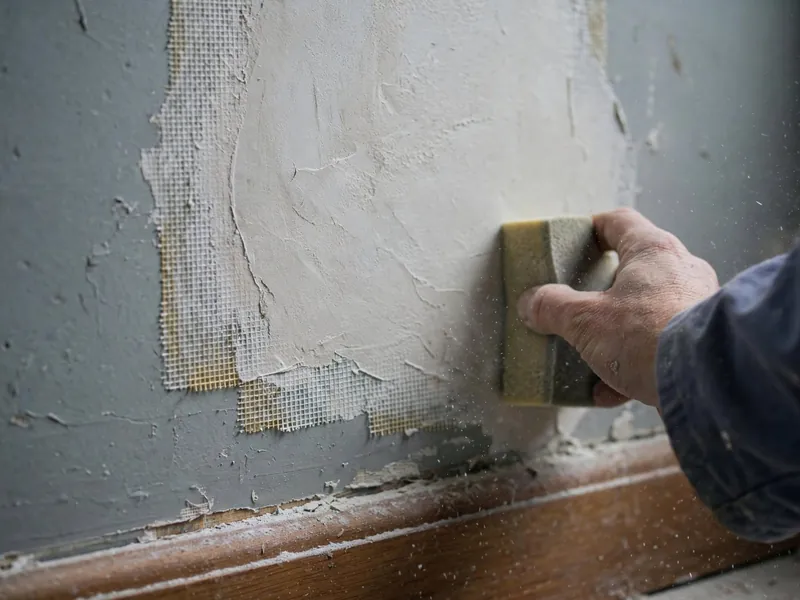
Once the cavity is dry, new board goes in, joints are taped and finished, and primer and paint follow. Ceilings also need texture matched; see ceiling repair.
Mould changes the job
Health Canada sizes the response to the patch, as the FAQ sets out: a small area cleaned with care, anything larger assessed or handled by a professional. HomeStars lists mould remediation at $1,500–4,000+ as its own line, a trade apart from drywall. Mention any mould you see.
What the job costs
The HomeStars water damage guide is Canada-wide. Its figures: extraction $500–1,500, drying $300–3,000, and $300–1,250 for replacing board or patching a ceiling. In HomeStars’ Ottawa drywall data, projects ranged $200 to $11,000, average $2,619 from 49 homeowner reports to March 2022.
What moves the number:
- Area and depth. One stained corner and a whole room differ by days.
- Equipment. Dehumidifiers are rented by the week.
- Paint. A repaired section usually needs the wall repainted to the corners.
See drywall repair cost for patch and hourly figures.
Insurance and warranty
What a policy covers depends on the cause, as the FAQ explains. Speak to your insurance representative before work begins, take photos of the damage first, and ask the company for photos of the opened wall.
For a new build with water coming through the basement walls, the builder comes first; report it before you pay for drywall.
Quote and contract
In Ontario a repair contract above $50 is written, and an estimate made part of it caps the bill at 10% over unless you agree to new work. The quote should list opening the wall, drying, board, finishing, paint and disposal. If wiring is behind the wall, the handyman or trade page shows when another trade goes first.
Who rebuilds the wall
The desk sends your request to one independent local company, which calls, prices the drywall work and does it. Water extraction and mould assessment can be separate trades, and the company will say which.
Questions to ask the company
- Do you measure moisture before closing the wall, and will you show me the readings?
- Which parts of the board come out, and how far past the stain do you cut?
- If you find mould once the board is open, what happens to the quote and the schedule?
- Who dries the room, you or a restoration company, and is that on this quote?
- Can I have photos of the opened wall for my insurer?
Have this ready for the call
- The date the water came in and the date the leak was stopped
- What was the source: roof, pipe, appliance, window or sewer
- Photos of the damage before anything is moved or cut
- The claim number, if you have called your insurer
- Whether the wall has insulation, a vapour barrier or tile behind it
Questions people ask
How do I know the drywall is past saving?
Board that is soft, swollen, crumbling, sagging or stained through the paint is usually replaced. A dry stain on solid board may only need stain-blocking primer and paint. A moisture check by the company settles it.
Does my home insurance pay for water damage?
It depends on the cause. Insurance Bureau of Canada says damage from sewer and drain backup is typically not covered by a standard policy, and optional sewer backup coverage is offered by most insurers. Overland flood coverage is separate. Call your insurer before you throw anything out or start work, and read your policy.
How big a mould patch can be handled without a professional?
Health Canada sets three tiers: up to about 1 m² can be cleaned with proper procedures and protective equipment; medium areas, under 3 m² combined, call for assessment by a qualified professional; one patch over 3 m² needs immediate action and a professional. Mention any mould you see in the request.
Can the company close the wall right after the leak is fixed?
Only when the framing and board behind it are dry. The HomeStars guide says to allow thorough drying before repairs to prevent mould, and that the whole process can take from a few days to several weeks. Ask the company how it checks dryness and who dries the room.
My new-build basement has damp walls. Who pays?
Tarion’s two-year warranty protects against water penetration through basement or foundation walls in a new home. Report it in writing to your builder within the warranty period and photograph the wall. Do the drywall repair after the builder has fixed the source, or the new board will get wet again.